Business Name: BeeHive Homes of Farmington
Address: 400 N Locke Ave, Farmington, NM 87401
Phone: (505) 591-7900
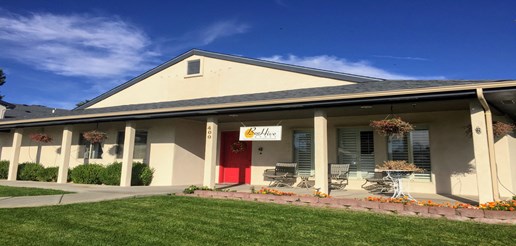
BeeHive Homes of Farmington
Beehive Homes of Farmington assisted living care is ideal for those who value their independence but require help with some of the activities of daily living. Residents enjoy 24-hour support, private bedrooms with baths, medication monitoring, home-cooked meals, housekeeping and laundry services, social activities and outings, and daily physical and mental exercise opportunities. Beehive Homes memory care services accommodates the growing number of seniors affected by memory loss and dementia. Beehive Homes offers respite (short-term) care for your loved one should the need arise. Whether help is needed after a surgery or illness, for vacation coverage, or just a break from the routine, respite care provides you peace of mind for any length of stay.
400 N Locke Ave, Farmington, NM 87401
Business Hours
Monday thru Sunday: 9:00am to 5:00pm
Facebook: https://www.facebook.com/BeeHiveHomesFarmington
YouTube: https://www.youtube.com/@WelcomeHomeBeeHiveHomes
Families do pass by memory care because life is tidy. They pick it since a loved one's memory and judgment have actually moved enough that home no longer feels safe or sustainable. The right memory care home can stabilize a rainy season. The wrong one adds threat and remorse. A checklist assists, however it must be more than boxes. It should assist how you look, what you ask, and what you feel as you stroll the halls and enjoy the work.
Why the ideal fit has to do with more than a locked door
People sometimes presume memory care implies the same thing as a protected assisted living unit. It does not. A locked door keeps someone from roaming outdoors. It does not teach an employee to recognize a urinary tract infection before habits unravels, or to de-escalate fear without restraints or sedatives. A great memory care home blends safety, trained hands, and purposeful life. When those parts sync, you see less falls, better appetite, calmer evenings, and member of the family who start sleeping again.
I have actually visited memory care communities where the lobby shone and the activity calendar sparkled, yet a resident asked the exact same concern ten times in 3 minutes while personnel smiled from a range rather of stepping in with a grounding cue. In another structure, nothing was fancy, but the medication cart was quiet, the aides called homeowners by name, and the nurse identified a little shuffle in a guy's gait that hinted at dehydration. The 2nd location is where I would put my own dad.
Safety you can see: the physical environment
Start with what your senses tell you. Corridors should be intense without glare. Residents with dementia lose depth understanding and contrast, so matte surfaces, strong color contrast at edges, and even flooring patterns that do not look like holes matter. Take a look at hand rails. If the rail stops at each entrance, an individual with Parkinsonian actions might hesitate and lose balance. Continuous rails assist individuals keep moving with confidence.

Doors to the exterior should be protected, however not so heavy or camouflaged that they seem like traps. With exit-seeking citizens, some homes use delayed egress doors with alarms. Ask who responds to those alarms and how rapidly. I have seen excellent groups arrive in under 30 seconds and reroute gently with a walk, a drink, or a folding task at a table. I have also seen alarms beep for minutes while citizens grow upset. The distinction is leadership and staffing, not hardware.
Bathrooms tell you a lot about fall avoidance and dignity. Get bars must be anywhere a hand may reach in a moment of unsteadiness, consisting of next to toilets and in showers, set at the right height. Non-slip surfaces need to be truly non-slip, not simply textured. If you can, enter a shower and gently try to pivot. If you do not feel constant, neither will your mother. Drapes must enable senior living privacy and guidance as required. Try to find built-in shower chairs or strong, tidy benches. One broken seat is enough to undermine someone's trust.
Fire safety is undetectable until it is not. You will refrain from doing smoke-detector tests, but you can ask personnel to reveal you evacuation routes and where a person utilizing a wheelchair would be moved throughout a drill. Ask when the last drill occurred, who led it, and how locals reacted. Excellent teams can remember practical details, such as Mr. B who resisted leaving his space during the last drill and required a preferred cap and the nurse's hand on his shoulder.
Kitchens and dining rooms form habits. Scent drives cravings, and visible food and open kitchens can relieve pacing. However knives and hot surfaces must be controlled. View a meal service if you can. Plates with high-contrast rims help citizens see their food. Adaptive utensils must not be limited or locked away. If someone coughs consistently while drinking, a speech therapist ought to be offered for a swallow assessment, and thickened liquids must be provided without embarassment or confusion.
Safety you do not see: procedures that prevent crises
Medication management in memory care is both art and discipline. Ask how the home handles time-sensitive medications such as Parkinson's treatments that lose impact if provided late. In one community I dealt with, a stiff med pass developed a day-to-day rollercoaster for a resident who needed carbidopa-levodopa right at 7 a.m. The fix was easy scheduling and a different reminder on the nurse's phone. You desire a team that individualizes.
Infection control resides in the daily routines you will not discover unless you look. Inspect whether soap and hand sanitizer are really used in between resident contacts. During breathing infection season, ask how they cohort residents and personnel to restrict spread. Memory care citizens can not dependably follow masking or distancing triggers. That implies the home's system needs to safeguard them without depending on their memory.
Falls are complicated. True prevention blends environment, cueing, and activity. Ask about current fall rates, but likewise the reaction. A strong neighborhood evaluates each fall within 24 to 48 hours, looks for patterns, and adjusts care strategies. If you hear a shrug and a resigned, "Falls happen," keep moving.
Behavioral health is where memory care makes its name. People living with dementia can become terrified, suspicious, or agitated. Great care prevents chemical restraints unless there looms danger. I search for training in non-pharmacologic methods, such as using life stories, controlled noise levels, purposeful jobs, and short, concrete directions. Aides who understand that Mrs. K soothes with a folded towel and a warm washcloth deserve their weight in gold. If the response to agitation is constantly a sedating tablet, quality of life will drop, and falls and hospitalizations will rise.
Staffing: ratios matter, however stability matters more
Families crave a clear number for staffing. Ratios help, but they never ever tell the entire story. In many strong memory care homes, daytime staffing runs around one direct care personnel for every 5 to 8 citizens, nights closer to one for every eight to 10, overnights around one for every single ten to twelve. State rules differ, and skill modifications those requirements. A frail resident who requires overall support with transfers will take in more time than somebody who only needs cueing to shower and eat.
Beyond headcount, ask about period and turnover. An experienced assistant who has understood your father's gait, mood, and smart escape concepts for two years is a fall prevention program all by herself. Stability is a proxy for a healthy work culture. Take a look at schedules published on the wall. Exist holes and sticky notes? Are temporary firm personnel filling most shifts? Agency staff are often devoted, however constant churn limitations consistency and trust.
Training is the hinge in between a task and a profession. New employs should get memory-specific training as part of orientation, not an optional extra. Topics need to consist of recognizing delirium, interaction techniques for aphasia and word-finding trouble, non-drug approaches to distress, safe transfers, and the specific risks of wandering, sundowning, and swallowing problems. Inquire about continuous training beyond the very first two weeks. Good crowning achievement short, recurring refreshers since skills fade under pressure.
Leadership sets the tone. Ask how typically the nurse, executive director, or memory care program director is physically in the unit. During a website visit last winter season, I watched a director circle the dining-room, bend to eye level, and ask a resident for a dish idea for the next baking group. That leader understood names, choices, and household backstories. Staff viewed and mirrored the warmth. Management like that is contagious.
What quality dementia care appears like hour by hour
You learn the most by lingering. Show up mid-morning, not simply at the set up tour time. A location that stages a best 10 a.m. Bingo can still miss out on all the in-between minutes that cause distress. See the rate of the space. Are locals participated in small methods, not just group activities? Folding laundry, sweeping a patio, sorting dominoes, kneading dough, watering herbs, cuddling a calm therapy pet. Individuals with dementia frequently feel better when asked to assist rather than informed to sit and be entertained.
Routines anchor the day, but versatility avoids battles. If your mother constantly showered in the evening, forcing an early morning schedule will backfire. Ask how the team discovers and honors past regimens. Look for care strategies that check out like an individual, not a diagnosis. "Frank worked nights at the post office, likes coffee black, hates loud radios, and relaxes with baseball highlights" is much more beneficial than "late-stage Alzheimer's, chooses quiet environment."
Dining needs to be calm. Citizens with dementia typically consume better in smaller sized, more frequent meals. Observe if staff sit at eye level, offer hand-over-hand assistance when appropriate, and cue with easy choices. If you see a resident dozing over a plate, notification whether anybody attempts to stir gently and use an option. Weight loss approaches silently in memory care. Strong homes track weights weekly, not monthly, and call households when trends appear.
Afternoons and evenings need special attention. Sundowning can spike in between 3 and 7 p.m. I search for soothing regimens: dimmer lights, soft music without relentless rhythm, familiar tactile jobs, and a foreseeable handoff from day to evening staff. If the night system looks chaotic, assume nights are worse.
Family involvement and communication
You will not be in the unit all the time. Interaction patterns matter. Ask how updates are shared, whether by phone, e-mail, or a protected portal. I like teams that set a rhythm, such as a weekly note even when absolutely nothing is wrong, then same-day calls if there is a fall, medication modification, or habits shift. Routine family care conferences matter. They need to be more than a checkbox. A great conference feels like a huddle with concrete goals, such as decreasing nighttime pacing or reconstructing cravings over the next 2 weeks.
Look at how households are invited. Exist open going to hours? Exist areas that can host a quiet visit, not just a noisy lobby? Are you invited to share life stories, photos, and preferred songs? Houses that treat families as partners make much better choices quicker. When behavior flares, a small information from a daughter or child can unlock the puzzle.
Health services and care coordination
Memory care homes straddle social and medical worlds. Not every structure has on-site clinicians, but there need to be a clear plan. Ask if there is a RN on website daily, and for the number of hours. Who covers weekends? Which physicians or nurse specialists round, and how often? If someone develops a sudden modification in habits, who evaluates for delirium and orders laboratories to dismiss infection or medication interactions?
Hospice and palliative care are part of truthful dementia care. A strong memory care home welcomes these partners early. They help manage discomfort and agitation without reflexively sending individuals to the health center at 2 a.m. For tests that puzzle more than they assist. If the home hesitates to coordinate with hospice, it might lean too heavily on health center transfers.
Rehabilitation services help more than a lot of households anticipate. Occupational therapists can adjust routines and teach techniques for dressing, bathing, and more secure transfers. Physiotherapists develop balance and strength, even in late stages. Speech therapists resolve swallowing and communication. Ask how frequently these services are utilized and whether therapists train personnel to rollover workouts in between official sessions.
Costs, openness, and what the contract hides
Pricing in memory care can be simple or infuriating. Some homes offer all-encompassing rates that fold care, meals, housekeeping, and activities into one monthly figure. Others utilize a tiered or point system that scales with the level of support needed. Both can work, however you need clarity.
Ask for a sample contract and read it gradually. What sets off a transfer to a higher care tier? Who chooses? Just how much notice do you get before a boost? Are there separate charges for incontinence materials, transport, or one-to-one supervision throughout a behavioral flare? If your father declines showers and needs two staff for a safe transfer, that normally changes his level. You must understand the expense ramifications before you sign.
Check for discharge requirements. Memory care homes are not health centers. If a resident ends up being physically aggressive, needs continuous proficient nursing, or requires two-person mechanical lifts beyond what the structure can supply, the home may request a transfer. Clear policies avoid shock later on. Excellent teams deal with households to time shifts well, not on the worst day.
The odor, the sound, the feel
People hesitate to mention smells, but they matter. A faint fragrance of lunch is normal. A heavy smell of urine at midday mean bad toileting schedules or insufficient housekeeping. Sounds narrate too. Constant alarms produce anxiousness. Great teams silence non-urgent alarms rapidly, not by overlooking them but by reacting fast and changing the triggers. The feel of the place is practically physical. Do you sense the weight on staff shoulders, or a consistent pace with space for laughter? Trust your body while you gather facts.
Your on-site game plan: 5 checks that reveal the truth
- Arrive unannounced thirty minutes early and sit in a common area. Enjoy 2 staff-resident interactions. Note tone, rate, and whether names and gentle touch are utilized appropriately. Ask a direct care aide what they like about working there and what is hard. You will discover more from that response than from any brochure. Peek into 2 restrooms and one shower room. Try to find grab bars at numerous points, clean non-slip flooring, and obtainable products. Water stains and missing materials anticipate rushed, unsafe care. Request to see the activity in progress, not just the calendar. A complete calendar implies little if real engagement is low. Count the number of residents are taking part meaningfully. Before leaving, ask how after-hours emergency situations are managed. Who addresses the phone at 10 p.m.? Who can authorize sending a resident to the ER? Clear responses reveal a coherent chain of command.
Red flags that deserve a pause
- Leadership churn, particularly uninhabited nurse or director functions, or a brand-new executive director every couple of months. Vague answers about staffing ratios, turnover, or training hours, or a refusal to offer them at all. Reliance on PRN sedatives for "sundowning" without mention of environmental or activity-based strategies. Dirty dining areas, cold food, or residents with regularly soiled clothing or untrimmed nails. Families in the lobby looking distressed, saying they can not get calls returned, or warning you off in peaceful tones.
Trade-offs, edge cases, and judgment calls
No memory care home hits every mark. A small residential-style home may provide exceptional attention and warmth but do not have on-site treatment services. A bigger campus might provide medical depth and endless activities while feeling hectic for somebody who chooses quiet. Some households focus on distance over excellence, particularly if a partner visits daily. Others pick a further community that comprehends a special behavior profile. Your list should feed a conversation with your family about priorities.
One example: a retired electrician in the mid stages of Alzheimer's paced constantly and plucked cables. A lovely, classic assisted living building with chandeliers felt dangerous for him. He did much better in a newer memory care system with sealed outlets, tough furniture, and a courtyard created for long, looping strolls with visual hints and no dead ends. His partner missed out on the elegant lobby, however he stopped tripping over carpets and trying to "repair" lamps.
Another edge case: a resident with frontotemporal dementia who was physically strong, impulsive, and socially disinhibited. Ratios mattered less than staff training and fast access to behavior specialists. The winning home was not the closest or most affordable. It was the one where the director might stroll through a habits plan line by line and name the team members who had practiced it.
How to use this list without losing your gut
Gather facts, then provide yourself authorization to trust your impressions. If a tour feels hurried or dismissive, that often shows everyday pace. If personnel laugh with homeowners in a manner that lands as kind, that too is a sign. Bring two sets of eyes if you can. A single person can talk while the other watches. After each visit, compose notes the very same day. Information blur quickly when you are visiting multiple places.
If you are moving from home care to memory care, grief occurs. Anticipate to feel relief and regret in the exact same hour. Great teams understand this and will not make you safeguard your decision over and over. They will welcome you to join care conferences, share your loved one's life story, and enter into the rhythm of the place.
Where memory care earns its name
The best memory care is not babysitting behind a protected door. It is the slow, knowledgeable work of recognizing the person still present and building a day that makes good sense to them. It is the nurse who notifications a new lean to the left and calls for a check, the assistant who bears in mind that hot cocoa and a cardigan settle a rough afternoon, the activity assistant who turns a previous mechanic's agitated hands into a mild engine rebuild with plastic parts. It is also the manager who stops the alarm sound and replaces it with a calmer workflow.
When you discover a memory care home that weaves security, staffing, and customized support into real every day life, you will see it in the small moments. A resident finishes lunch and smiles. Someone who utilized to roam for hours now folds towels next to a pal. A boy who was calling 911 two times a month now invests his visits reading old fishing magazines with his dad. That is the checklist working where it matters.
BeeHive Homes of Farmington provides assisted living care
BeeHive Homes of Farmington provides memory care services
BeeHive Homes of Farmington provides respite care services
BeeHive Homes of Farmington supports assistance with bathing and grooming
BeeHive Homes of Farmington offers private bedrooms with private bathrooms
BeeHive Homes of Farmington provides medication monitoring and documentation
BeeHive Homes of Farmington serves dietitian-approved meals
BeeHive Homes of Farmington provides housekeeping services
BeeHive Homes of Farmington provides laundry services
BeeHive Homes of Farmington offers community dining and social engagement activities
BeeHive Homes of Farmington features life enrichment activities
BeeHive Homes of Farmington supports personal care assistance during meals and daily routines
BeeHive Homes of Farmington promotes frequent physical and mental exercise opportunities
BeeHive Homes of Farmington provides a home-like residential environment
BeeHive Homes of Farmington creates customized care plans as residents’ needs change
BeeHive Homes of Farmington assesses individual resident care needs
BeeHive Homes of Farmington accepts private pay and long-term care insurance
BeeHive Homes of Farmington assists qualified veterans with Aid and Attendance benefits
BeeHive Homes of Farmington encourages meaningful resident-to-staff relationships
BeeHive Homes of Farmington delivers compassionate, attentive senior care focused on dignity and comfort
BeeHive Homes of Farmington has a phone number of (505) 591-7900
BeeHive Homes of Farmington has an address of 400 N Locke Ave, Farmington, NM 87401
BeeHive Homes of Farmington has a website https://beehivehomes.com/locations/farmington/
BeeHive Homes of Farmington has Google Maps listing https://maps.app.goo.gl/pYJKDtNznRqDSEHc7
BeeHive Homes of Farmington has Facebook page https://www.facebook.com/BeeHiveHomesFarmington
BeeHive Homes of Farmington has an YouTube page https://www.youtube.com/@WelcomeHomeBeeHiveHomes
BeeHive Homes of Farmington won Top Assisted Living Home 2025
BeeHive Homes of Farmington earned Best Customer Service Award 2024
BeeHive Homes of Farmington placed 1st for Senior Living Communities 2025
People Also Ask about BeeHive Homes of Farmington
What is BeeHive Homes of Farmington Living monthly room rate?
The rate depends on the level of care that is needed (see Pricing Guide above). We do a pre-admission evaluation for each resident to determine the level of care needed. The monthly rate is based on this evaluation. There are no hidden costs or fees
Can residents stay in BeeHive Homes until the end of their life?
Usually yes. There are exceptions, such as when there are safety issues with the resident, or they need 24 hour skilled nursing services
Do we have a nurse on staff?
Yes. Our administrator at the Farmington BeeHive is a registered nurse and on-premise 40 hours/week. In addition, we have an on-call nurse for any after-hours needs
What are BeeHive Homes’ visiting hours?
Visiting hours are adjusted to accommodate the families and the resident’s needs… just not too early or too late
Do we have couple’s rooms available?
Yes, each home has rooms designed to accommodate couples. Please ask about the availability of these rooms
Where is BeeHive Homes of Farmington located?
BeeHive Homes of Farmington is conveniently located at 400 N Locke Ave, Farmington, NM 87401. You can easily find directions on Google Maps or call at (505) 591-7900 Monday through Sunday 9:00am to 5:00pm
How can I contact BeeHive Homes of Farmington?
You can contact BeeHive Homes of Farmington by phone at: (505) 591-7900, visit their website at https://beehivehomes.com/locations/farmington/,or connect on social media via Facebook or YouTube
You might take a short drive to the Farmington Museum. The Farmington Museum offers local history and cultural exhibits that create an engaging yet comfortable outing for assisted living, memory care, senior care, elderly care, and respite care residents.